
Raja Hindustani by King
The Blog #17: oh, what could have been
The Blog features short writeups on short EPs. My thoughts and track-by-track notes are listed below. Listen to the EP. Discuss. Enjoy.
Place @original listen: first at work, and then at home
Thoughts:
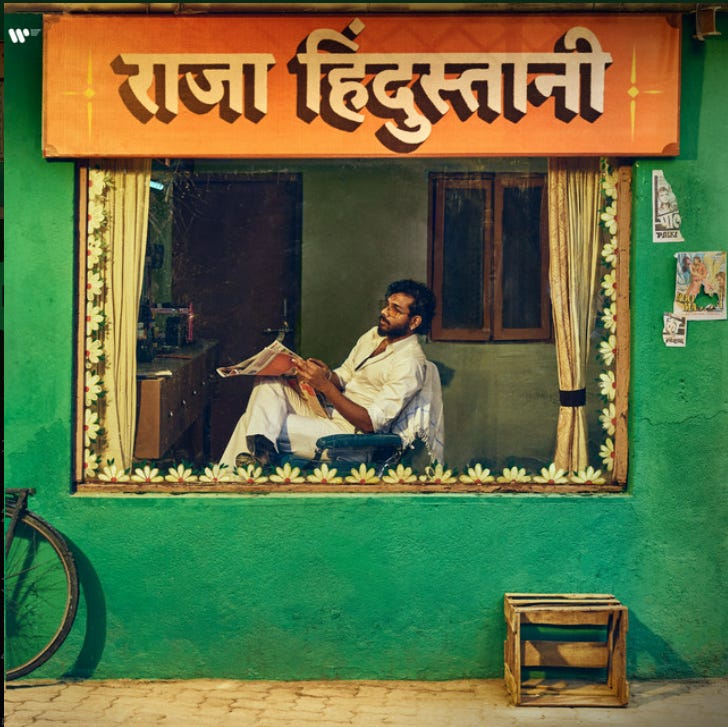
Arijit Singh breaking free from the clutches of Bollywood playback singing to go independent (whatever that means in this day and age) should not be the surprise that it is being made out to be. When was the last time Bollywood had a romantic song that was on every radio station? Dhurandhar had a couple hits, but the bluster and excitement of war is fleeting—it is always followed by noise and dread. And even if we remove the South-Indian-repurposed mass numbers of Dhurandhar, what movie soundtrack had the ears of the radio before this? Without being dramatic or clickbait-y, I declare, in the mildest possible terms, a whisper almost, that Bollywood music is not slapping like it used to. But you knew this, yes you did; denying the truth only makes it harder for me to make my point. Every time you have gone to the club these past few years, why do you think they only play Bollywood numbers from the late 2010s? We are in an age of future-forward nostalgia baiting—the new must mirror the old. While Bollywood films have been doing this off-late, their music has not. And so, we have Raja Hindustani—a very Bollywood-coded album that is made to be a jukebox of rehashed Bollywood romantic numbers. The guest-list consists entirely of playback-singer royalty, ranging from a rejuvenated Kumar Saanu to a subdued Rekha Bharadwaj. You have songs for all generations, and I guess the general idea seems to be to make what constitutes a romantic track from each era of Bollywood. An example of this is Kamaal Hai, the Gen Z entry to the album that accurately represents what we think love songs are today—an Instagram reel that you send to your partner and ask them if they’re down to recreate the choreography with you. King spends a lot of time trying to place his collaborators in soundscapes the listeners may associate them most with. In doing so, his role in the tracks diminishes—he either tries to out-croon certified crooners, or play second fiddle on a duet, like the Vanilla Chocos. But mainly, the listener is not offered anything new. You have heard all these songs before, you may not be able to place them, but you definitely recognize their essence. And I guess, by definition, that would make Raja Hindustani a good pop album. I do wonder about what could have been, though. An album that follows its cover art’s earth-y aesthetic and allows its star collaborators to let loose like we have never seen. The possibilities of an unleashed Bollywood singer are endless. I guess I’ll wait and pray for the Arijit project.
Notes:
Kamaal Hai: feels like this track has been out for a minute. Has all the makings of a reel-worthy hit—reasonably unmemorable verses, song about love, quick and familiar bpm so you can make dance reels without too much effort. But most of all, and this is key, the song’s sole objective is the hook--every portion of the song directs you to the hook which is tailor-made for the 30-second listener. The MBA-wielding label executives must be so proud.
Jo Ishq Hua: if AR Rahman made this, it would be a patriotic and emotional song that played at the climax of an army movie (sentimental ones like Amaran, not violent ones like Dhurandhar). I really wish this track had memorable lyrics because it had all the makings of a rousing romantic number of lovers professing their love by celebrating Holi in white Kurtas and Kurtis. They are celebrating in a desert in Udaipur. They throw colour on each other yet their teeth are a Colgate advertisement’s dream. They flash their pearly whites at the camera. No water is used because we’re environmentally conscious.
Maza Pyaar Karne Mein: King got Kumar Sanu to go Bhai vs Bhai, back-to-back duet with him in the big ‘26?? Crazy times. Kumar Sanu sounds at home with the production and the only way you can tell that this song was made in 2026 is that it is only 3.5 minutes long. Good track. Your parents are gonna love this number and they will reciprocate by breaking out their 20-year-old cassette player to play some Kumar Sanu golden hits. Cherish this moment.
Yeh Dil Mujhko Tu Dede: the most surprising track on this album. The rousing horns at the start make you think that we have an Industry-Baby type situation, but then the production switches..to reggae guitars? And the hook is delivered with horns over the reggae guitars? And it somehow all works?? Sunidhi Chauhan sleepwalks through her bit but her 10% is 99% of the world’s 110% so no complaints. Favourite track off the album.
Yeh Safar: as with the Kumar Sanu joint, this one is also specifically designed to make Shaan comfortable. This sounds like a song off of one of Shaan’s movie discography. The track gets a little repetitive because King also tries to match Shaan’s crooning, so there’s no texture. This could very easily have just been a Shaan song without King.
Haal e Dil: we got Shreya Ghoshal in her Ghar More Paradesiya element. The Tabla sounds sharp, and Shreya is fantastic as expected. Very melodious track. The production makes this track--very rich and Hindustani and perfectly complements the vocals. King holds his own, but allows Shreya to control the tempo and mood of the song. What the hell was that outro though?
Woh Pehla Akshar: should have followed the template of the previous track and let Rekha Bharadwaj run the show, but King starts things on this one, and I feel like the track is too lo-fi for a powerful voice like Rekhaji’s. She is forced to use her inside voice to keep up with the energy. Nice use of the Veena though.
Aahista Aahista: we started the album with a track made for reels and we end with another. Really goes to show that a lot of the trending songs on your feed are more a result of marketing than catchiness because everything is made to be catchy today. King did A/B testing with Kamaal Hai and this track, and Kamaal Hai won.